
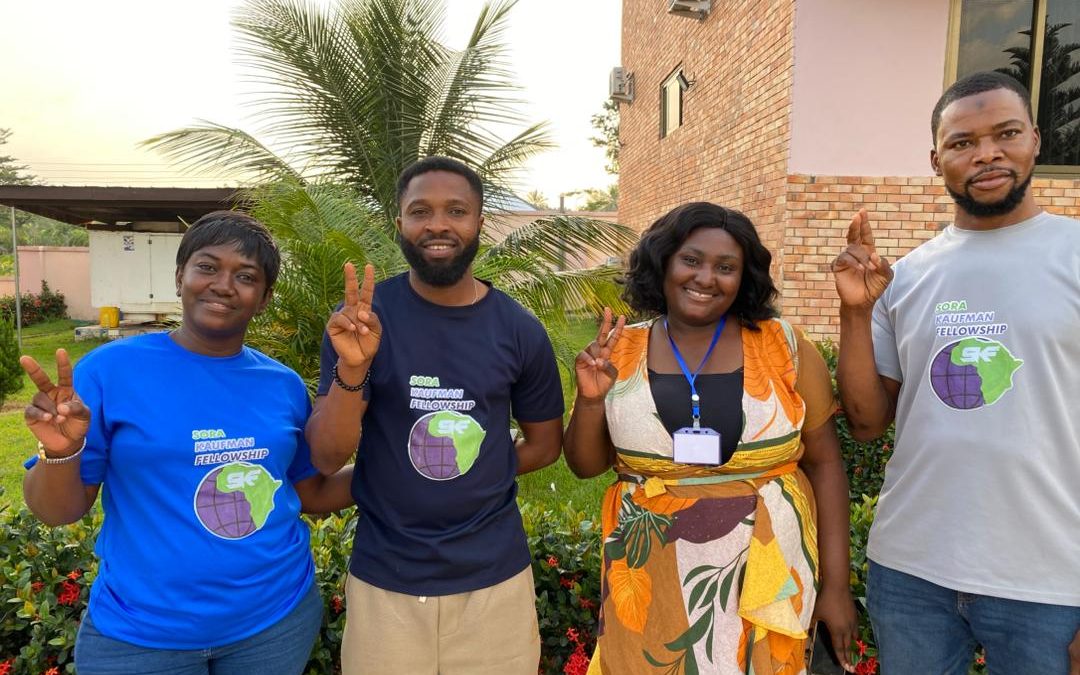
Three individuals selected for the second cohort of the prestigious Sora Kaufman Fellowship, have arrived safely at Asiakwa in the Abuakwa South Municipality of Ghana’s Eastern Region to on a two-week intensive training program. They are Amada-Smith Richmond, Bedzina Confidence Dominic, and Juliet Nyarko Adansi.
The fellowship, widely recognized as ACA’s flagship initiative, is dedicated to cultivating a vibrant network of African leaders committed to advancing community-driven development (CDD) and grassroots advocacy across the continent.
The program is designed for practitioners working directly with communities and local institutions to address systemic challenges that limit citizens’ participation in governance and decision-making.

Through hands-on learning, collective exchanges, and strategic networking, the fellowship strengthens expertise in collective action, human rights, advocacy, and local governance systems.
This year’s cohort follows the successful completion of a month-long immersive training by the inaugural group, whose impact continues to ripple across their respective communities.
Opening session
The opening ceremony will bring together distinguished leaders and facilitators who embody the vision of the fellowship. ACA’s Executive Director, Jonathan Kaufman; the Municipal Chief Executive of the Abuakwa South Municipal Assembly, Nana Adu Sarpong Addo-Aikins; and ACA’s Director of Community-Driven Development, Nana Ama Nketia-Quaidoo, will welcome the fellows. Members of Cohort 1 will also participate to share insights, inspire the new fellows, and foster cross-cohort learning.
Following the welcome session, fellows will explore their expectations, fears, and ground rules, creating a transparent environment that promotes trust and collaboration. An official ACA/Fellowship Agreement Signing will formalize their commitment to the program’s values and objectives.
The core of the training will introduce fellows to the essential pillars of CDD. Sessions will cover the introduction to community driven development, theories and concepts of collective action and rudiments, stages, advantages, and challenges of collective action
These modules will guide fellows in understanding how collective mobilization influences sustainable development outcomes and community resilience.
Daily evaluations and reflections will ensure continuous learning and adaptation, strengthening fellows’ ability to critically assess their roles as development practitioners.
Field-Based Learning: FCAP in Practice
A major highlight of the first week will be a field visit to observe a Facilitated Collective Action Plan (FCAP) meeting. Here, fellows will witness how different segments of a community contribute to local decision-making processes, an eye-opening opportunity to see collective action unfold in real time.
After the field experience, fellows will return for a detailed debrief, unpacking their observations and articulating how these lessons can be applied in diverse development contexts.
Community stay
Midway through the program, fellows will pack up for a transformative community stay, departing to the Papaye Recreational Village. This immersion is designed to strengthen understanding of CDD principles by allowing fellows to live, engage, and work closely with community members.
Upon return, a structured session will invite fellows to reflect on their experiences with community life, challenges encountered, personal and professional insights gained and what could be done differently in future CDD engagements
These reflections are expected to deepen empathy, refine field skills, and broaden perspectives on people-centered development.
Storytelling, Stakeholder Engagement, and Work-Life Balance
As the training progresses, fellows will participate in a special webinar on effective communication and storytelling, equipping them with tools to document and share community impact stories compellingly.
Another critical module will focus on stakeholder engagement with MMDAs, local authorities, chiefs, and community structures. Fellows will learn best practices for navigating local governance systems, a vital skill for any community development practitioner.
Additional sessions will address monitoring and evaluation techniques, balancing family life, health ethics, and demanding development work, overview of post–on-site fellowship activities
These sessions ensure that fellows not only develop technical competence but are also prepared for the personal and emotional demands of development practice.
Looking Ahead
With its blend of theory, practice, reflection, and community immersion, the Sora Kaufman Fellowship continues to establish itself as a leading program shaping Africa’s next generation of community development leaders.
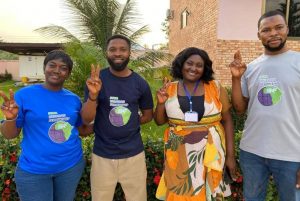
As Cohort 2 begins their journey in Asiakwa, they carry forward a growing legacy, one grounded in collaboration, empowerment, and a deep commitment to ensuring communities across Africa have a stronger voice in shaping their own development futures.
Commentaires récents