
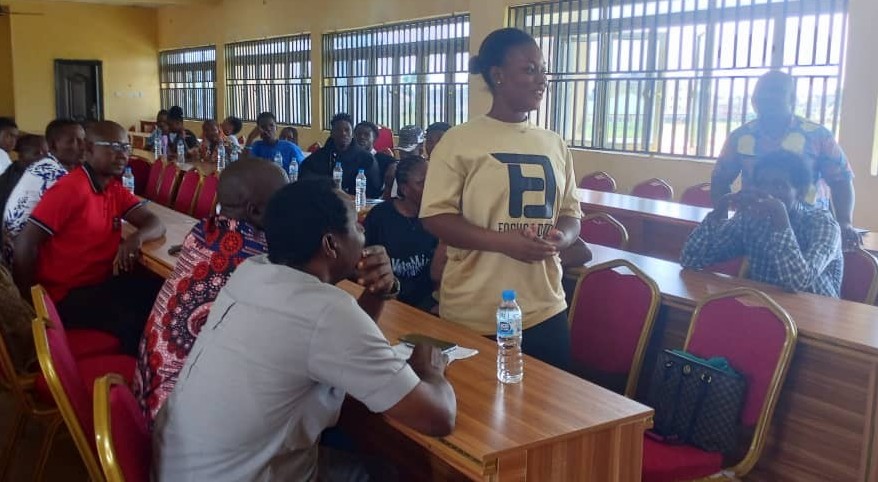
From identifying local environmental challenges to developing practical solutions for their communities, 48 students at Delta State University, Abraka spent two days exploring how science can become a powerful tool for community action and positive change.
On 25–26 May 2026, Advocate for Community Alternatives (ACA), in partnership with the Department of Geology, Delta State University, organized a two-day training programme titled “Community Science: Introduction and Foundations – Youth and Emerging Leaders Training Program.” The training brought together undergraduate and postgraduate students from Geology, Environmental Science, Biochemistry, Agricultural Extension, and Pharmacy to explore the growing field of community science.
Community science places communities at the center of research and problem-solving. Rather than viewing local people as passive recipients of information, community science recognizes them as partners in generating knowledge, identifying solutions, and driving change.
Throughout the training, participants were introduced to the foundations of community science, scientific inquiry, ethical research practices, data collection and analysis, stakeholder engagement, leadership, and community-based participatory research. The programme emphasized practical application, encouraging participants to connect scientific thinking with challenges they encounter in their own communities.
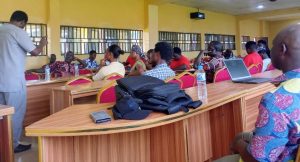
Community problem mapping
One of the most engaging activities involved community problem mapping, where participants identified environmental and social issues affecting their communities. These included waste management challenges, flooding, water quality concerns, environmental degradation, public health issues, and youth-related social challenges.
Participants then worked through a series of exercises that helped them move from identifying problems to developing research questions, mapping stakeholders, exploring potential solutions, and designing action plans. By the end of the programme, participants had not only identified issues but had also outlined practical steps they could take to address them.
The training also highlighted the critical role of young people in promoting evidence-based decision-making and community development. Through leadership reflection sessions and group discussions, participants explored how they can contribute to positive change as researchers, advocates, innovators, and community leaders.
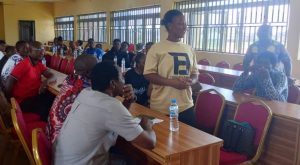
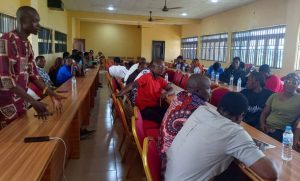
According to the end-of-training evaluation, participants responded overwhelmingly positively to the programme. All participants rated the training as Good, Very Good, or Excellent across all evaluation criteria, with no Fair or Poor ratings recorded. The quality of facilitation received the highest rating, while overall satisfaction and achievement of learning objectives also received exceptionally strong feedback.
Beyond the technical skills acquired, the programme fostered interdisciplinary collaboration among students from different academic backgrounds. The diversity of perspectives enriched discussions and demonstrated the value of bringing together multiple disciplines to address complex community challenges.
The training forms part of ACA’s broader commitment to strengthening community participation in research, environmental governance, and evidence-based advocacy. By equipping young people with practical skills and encouraging community-centered approaches to problem-solving, ACA seeks to support a new generation of community scientists capable of driving sustainable and inclusive development.
As the programme concluded, participants expressed strong interest in advanced training opportunities, mentorship, and future community science initiatives. Their enthusiasm and commitment suggest that this is only the beginning of a growing movement to connect science, communities, and action.
Through partnerships such as this one with Delta State University, ACA continues to invest in the next generation of leaders who will use knowledge, evidence, and collaboration to address the challenges facing their communities and create lasting positive change.
“Community science is not just about collecting data—it is about empowering communities to understand their realities, make informed decisions, and take action.
Commentaires récents