
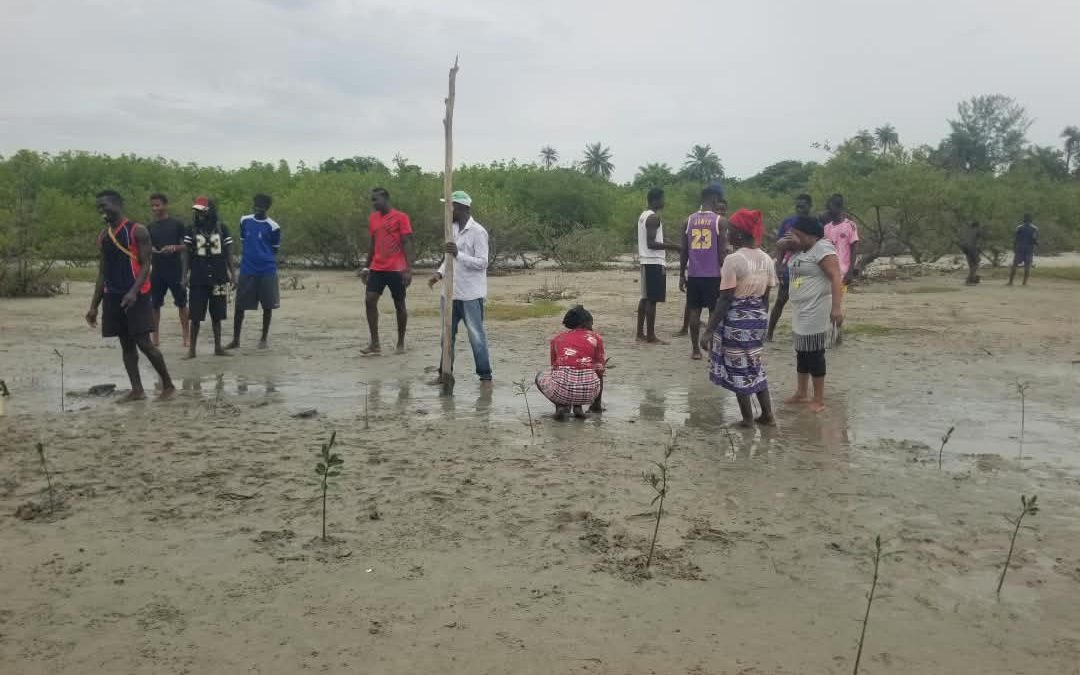
The Niafrang community in Senegal’s Casamance region has restored approximately 4.8 acres of mangrove, reinforcing its long-standing efforts to protect the coastal environment and strengthen the resilience of the community.
The restoration exercise, undertaken on 29 August 2026 with support from the Advocates for Community Alternatives (ACA), brought community members together to replant mangroves in areas identified as important to the ecological health of the landscape.
For Niafrang, mangrove restoration is more than an environmental activity. The mangrove ecosystem forms part of the community’s natural resource base, supporting biodiversity, helping to protect the coastline and contributing to the livelihoods of people who depend on the surrounding environment.
The latest restoration builds on earlier community-led efforts to restore degraded mangrove areas. In recent years, the community has continued to demonstrate its commitment to restoring and protecting the ecosystem despite the environmental and social pressures affecting the area.
Speaking during the exercise, community members emphasized the importance of maintaining the restoration effort and ensuring that younger generations inherit a healthy and productive environment.
The restoration also reflects ACA’s approach of supporting communities to take an active role in addressing environmental challenges affecting their territories. Rather than treating environmental protection as an external intervention, the approach places communities at the centre of identifying environmental priorities, generating local knowledge and implementing practical solutions.
The Niafrang community has for many years been involved in efforts to protect its coastal environment, including its opposition to proposed zircon mining in the area. The community’s concerns have centred on the potential implications of mining for land, water resources, agriculture, mangroves and livelihoods.
During the August mission, an ACA representative also visited an area where mining activities were observed. The visit provided an opportunity to better understand the environmental context within which the community is undertaking its restoration work.
For the community, however, the restoration of the mangroves remains an important expression of its commitment to the future of Niafrang.
The restoration comes at a time when coastal communities across the region are facing increasing pressure from environmental degradation, climate-related impacts and competing demands on natural resources.
Mangroves are particularly important in this context. They provide habitat for a wide range of species, contribute to shoreline protection, support fisheries and can help communities adapt to changing coastal conditions.
The Niafrang experience demonstrates how local environmental action can complement broader advocacy for sustainable development. By restoring degraded areas and strengthening community stewardship of natural resources, residents are contributing directly to the protection of the ecosystem on which their livelihoods and future depend.
The 4.8 acres restored in 2026 therefore represent more than an area of replanted mangrove. They represent continued community action, environmental stewardship and a commitment to ensuring that Niafrang’s natural resources remain available for future generations.
For ACA, supporting such community-led initiatives forms part of its broader commitment to putting science and environmental action in the hands of the people most directly affected by environmental change.
Recent Comments