
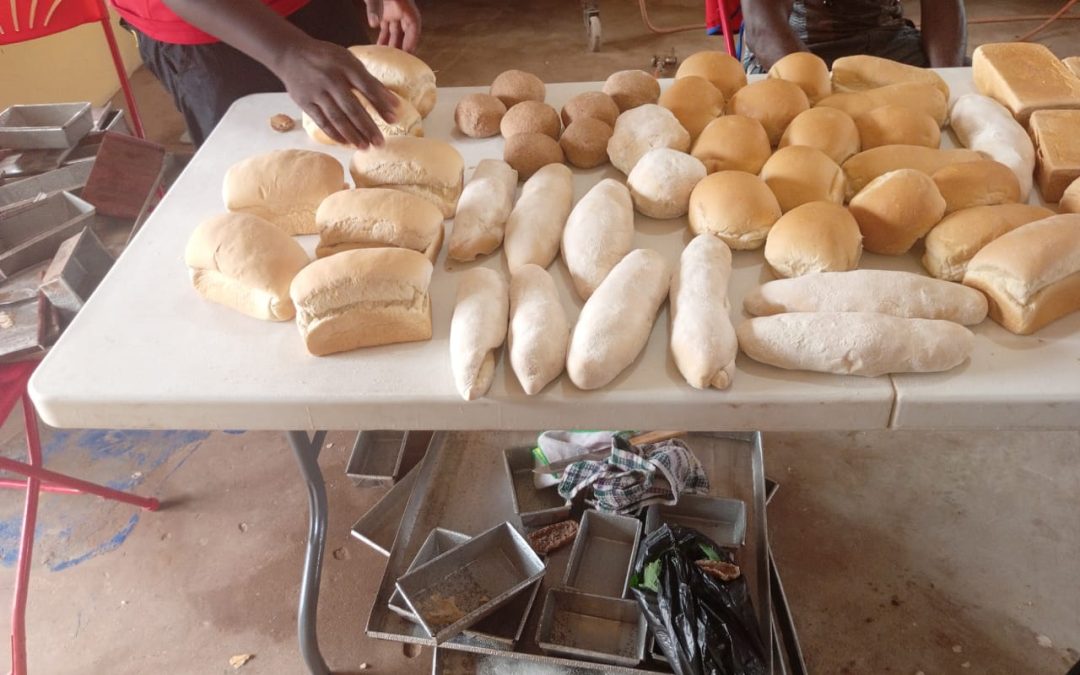
The exceptional commitment of the Apedwa community in the Abuakwa South Municipality to local development has culminated in the establishment of a community-owned bakery, with residents contributing GH¢150,000 towards the project.
The bakery, a partnership between Advocates for Community Alternatives (ACA), the Abuakwa South Municipal Assembly and the Apedwa community, represents a remarkable example of community-driven development, with residents demonstrating their determination to invest in an initiative aimed at creating jobs and improving livelihoods.
The project, which began in May 2024 and continued through June 2026, received a microgrant of GH¢114,000 from ACA, while the Municipal Assembly contributed GH¢5,000 as counterpart funding.
Exceptional commitment by community
However, it was the community’s substantial contribution of GH¢150,000 that underscored the residents’ exceptional commitment to making the initiative a reality.
The community provided a five-bedroom building that required renovation, while the funeral committee and other individuals contributed funds towards the renovation. Community members volunteered their time and actively participated in every activity related to the project. They did so because vendors had to travel daily to Suhum to conduct their businesses, and the journey along the busy Accra – Kumasi highway posed significant challenges. They therefore saw the project as an opportunity to address the situation.
The youth in the community viewed the project as an avenue for job creation and consequently committed themselves to its successful implementation. Since the business required substantial capital, individuals provided financial and material support to ensure the project’s successful completion.
Job creation
The bakery officially commenced operations on September 7, 2026, marking the culmination of months of collective effort and investment by the three partners.
The facility currently employs eight people, comprising five women and three men, while approximately five other individuals are indirectly earning income through activities along the production chain.
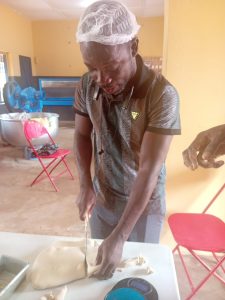
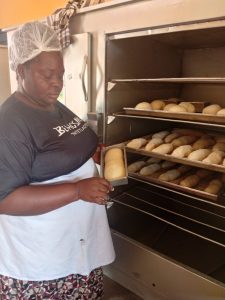
The bakery uses half a bag of flour daily to produce bread, which is already attracting patronage from residents.
Beyond providing employment and income opportunities, the project is also equipping community members with practical skills to support their economic independence.
So far, 15 community members have received training in bread and pastries production, positioning them to explore opportunities in the baking industry and related businesses.
The initiative is expected to expand its reach beyond Apedwa as demand for its products grows.
With a tricycle available for transporting bread, the bakery plans to extend its distribution network to adjoining communities, potentially increasing sales and creating additional livelihood opportunities.
Although operations are still in their early stages, the management and workers have agreed to assess the bakery’s performance at the end of September before determining payments based on the profits generated.
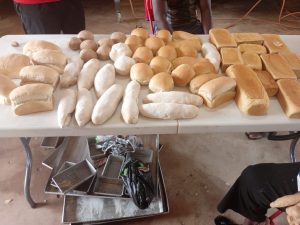
This arrangement reflects the project’s initial operational phase as the partners work towards establishing a sustainable business model.
The Apedwa bakery exemplifies how community participation, local government support and development partnerships can combine to create economic opportunities at the grassroots level.
The community’s GH¢150,000 contribution stands as a testament to the residents’ determination to take ownership of their development and build an enterprise that could provide lasting benefits for generations to come.
As the bakery settles into full operation, the hope is that its success will inspire similar community-led initiatives across the municipality and beyond.
Recent Comments